
I have spent numerous hours examining table games across multiple platforms, and Ultimate Texas Hold’em consistently shines as one of the most intellectually rewarding variants available. Unlike conventional poker rooms where you face other players, this game sets you directly against the dealer in a organized format that removes bluffing while preserving deep strategic choices. The version I have examined on Impressario Casino embodies the true rhythm of the game, with a clean interface that lets the mechanics shine through. What makes this unique implementation valuable is how it harmonizes accessibility for newcomers with sufficient tactical nuance to maintain experienced players interested. I will guide you through everything you should know before you place your first ante bet, from the fundamental rules to the nuanced adjustments that separate casual play from informed decision-making.
Pre-Flop Strategy and Hand Selection
Pre-flop moves in Ultimate Texas Hold’em are surprisingly simple compared to the nuanced ranges of traditional poker. You either make a four-times raise or you check, and the threshold for raising is fairly strict. From my analysis, the baseline raising range includes any pair of tens or better, ace-king, ace-queen, and ace-jack suited. Some strategy charts expand this slightly to include king-queen suited and ace-ten suited, but the EV difference is minimal and varies with the specific paytable. What I find particularly instructive is how position does not exist in this game; you always act first, which means you cannot afford the speculative plays that define late-position strategy in standard Hold’em. Every hand must rely on its raw strength.
The true challenge comes in fighting the impulse to raise with hands that look attractive but lack the mathematical backing. Ace-jack offsuit, for example, is a hand many recreational players raise without thinking, yet it falls below the profitability threshold in most game configurations. I have learned to view pre-flop as a screening tool: you are not trying to outsmart the dealer at this stage; you are simply finding hands with enough raw equity to justify the four-times multiplier. The dealer’s random hand means your edge comes solely from hand selection and the leverage of early raises. Anything that clouds this focus, such as raising with suited connectors or small pairs, brings in variance without commensurate expected value, and over time that equation hurts your results.
Sophisticated Concepts for Skilled Players
Once you have mastered the basic strategy, there are several advanced concepts that can further enhance your edge. Board texture analysis becomes increasingly nuanced as you develop the ability to classify flops by how they relate with the dealer’s random range. Dry, disconnected boards favour your unpaired high cards because the dealer is less likely to have connected, while wet, coordinated boards benefit the dealer’s random hand because any two cards have a higher probability of aligning with the texture. I adjust my flop raising range based on these classifications, widening slightly on dry boards and tightening on wet ones. This adjustment is subtle, perhaps shifting the threshold by a few percentage points, but over thousands of hands it accumulates into a measurable difference in expected return.
Another advanced factor is the interplay between the ante bet and the blind bet when the dealer fails to qualify. On boards where no pair is possible, the dealer cannot qualify, which means your ante ties regardless of your hand. In these scenarios, the only way to profit is through the blind bet, which requires a straight or better. This dynamic should shape your river decisions on paired versus unpaired boards. I also record the frequency with which I come across specific paytable variations, because even small differences in the blind payout schedule can shift the optimal strategy for borderline hands. A paytable that pays 4 to 1 for a full house instead of 3 to 1, for instance, adds enough equity to make certain drawing hands profitable that would otherwise be questionable. n-tv.de These enhancements separate recreational play from serious engagement with the game’s mathematical foundations.
FAQ
What constitutes the minimum hand I ought to raise pre-flop in Ultimate Texas Hold’em?
The baseline pre-flop raising range contains any pair of tens or greater, ace-king suited or offsuit, ace-queen suited or offsuit, and ace-jack suited. Some strategy adjustments incorporate ace-ten suited and king-queen suited, but the expected value gain is negligible. Betting with hands weaker than these thresholds creates negative expectation over time. I suggest starting with the tighter range and only expanding once you have tracked your results and confirmed profitability. The four-times multiplier makes pre-flop discipline especially important to your overall return.
In what way does the dealer qualification rule affect my strategy?
The dealer must have at least a pair to meet the requirement. When the dealer does not qualify, your ante bet ties regardless of your hand quality, and only the blind and play bets are decided. This rule means you should be more inclined to call on the river with marginal cards, because even if you lose the play bet, you may still push the ante if the dealer fails to meet the requirement. The qualification dynamic also means that on unpaired boards where no pair is possible, the dealer automatically does not qualify, which should affect your river calling decisions.
Am I able to count cards or use any advantage play techniques?
Ultimate Texas Hold’em uses a continuous shuffling mechanism or a fresh deck each hand on digital platforms, which prevents card counting as a viable strategy. The game’s edge arises entirely from optimal decision-making based on your hand strength relative to the community cards and the dealer’s random range. There are no community cards shared between hands that would allow tracking. Focus your efforts on mastering the correct raise and fold thresholds for each street, as this is the only reliable path to lowering the house edge.
What is a typical house edge for this game?
With optimal strategy, the house edge for Ultimate Texas Hold’em typically ranges between two and two and a half percent of your ante bet, though the exact figure relies on the specific blind paytable and whether you play the optional trips side bet. This edge is higher than blackjack but lower than many other poker-based table games. The blind bet’s high payouts for premium hands introduce significant variance, which means your short-term results can diverge substantially from the mathematical expectation. I recommend treating the house edge as a long-run cost of entertainment rather than a target to overcome.
Is it advisable to ever play the optional trips side bet?
The side wager on trips typically carries a higher house edge than the main game, often exceeding five percent depending on the paytable. This bet rewards when your final hand is three of a kind or better, regardless of the dealer’s hand. While it adds excitement and a chance for larger payouts, the mathematical expectation is negative enough that I generally avoid it. If you choose to play the trips bet, treat it as a separate entertainment expense and size it smaller than your ante bet to lessen its impact on your overall return.
What duration does a typical session take to play meaningfully?
A session of approximately one hundred hands gives enough volume to experience the game’s natural variance and begin assessing your strategic consistency. At a comfortable pace of roughly forty to fifty hands per hour on a digital platform, this converts to about two hours of focused play. I find that sessions shorter than fifty hands often feel dominated by short-term luck, while sessions exceeding three hours can lead to fatigue that impairs decision quality. Set a hand count target rather than a time limit to maintain strategic discipline throughout your session.
Is Ultimate Texas Hold’em suitable for beginners to table games?
Absolutely, but with the crucial caveat that you should learn the basic strategy before playing for real money. The game’s rules are more straightforward than traditional poker because you face only the dealer and there is no bluffing element. However, the multi-street decision structure and escalating raise multipliers mean that intuitive play leads to costly mistakes. I suggest spending time with a strategy chart and playing in free-play mode until the raise and fold decisions feel automatic. Once you have absorbed the core thresholds, the game becomes approachable and genuinely rewarding for players at all experience levels.
Comparing Ultimate Texas Hold’em to Different Table Games
When I assess Ultimate Texas Hold’em compared to different casino table games, the most instructive comparison is with standard blackjack, which shares the player-versus-dealer structure but differs fundamentally in strategy depth. Blackjack offers a house edge that can go below one percent with perfect basic strategy, while Ultimate Texas Hold’em typically maintains a house edge around two percent with optimal play. However, the Hold’em variant delivers significantly higher potential payouts through the blind bet, which produces a different risk-reward profile. The royal flush payout of 500 to 1 has no equivalent in blackjack, and this lottery-like element appeals to players who like the possibility of a transformative win from a single hand. I believe that the two games suit different psychological profiles, with Hold’em suiting those who prefer strategic depth over rapid decision cycles.
Relative to three-card poker or Caribbean stud, Ultimate Texas Hold’em provides more player agency and a lower house edge when played correctly. Three-card poker streamlines decisions to a single play-or-fold choice, while Caribbean stud confines you into a rigid structure with no post-flop flexibility. The multi-street decision tree in Ultimate Texas Hold’em provides skilled players more opportunities to exercise an edge, even if that edge is smaller on a per-decision basis. I appreciate how the game rewards study and discipline in a way that simpler table games cannot match. The learning curve is steeper, but the intellectual satisfaction of navigating complex board textures and optimising raise timing provides a richer experience that encourages me returning to the table.
Common Mistakes and Tips to Steer Clear
Following analysis of thousands of hands and experiencing plenty of my own errors along the way, I have recognized several repeated errors that regularly hurt players’ results. The most harmful by far is raising pre-flop with hands that fail to reach the equity threshold. Ace-jack offsuit, king-queen offsuit, and medium pocket pairs like eights or nines are the usual culprits. These hands appear powerful in a vacuum, but against a random dealer hand with the four-times multiplier, they simply do not generate enough expected value to make the risk worthwhile. I maintain a mental checklist of the exact raising range and avoid straying, even when a session has been cold and impatience creeps in. Discipline at this decision point alone can turn a losing player into a break-even or slightly profitable one.
An additional pervasive error is giving up too much on the turn and river. Once you have reached the turn, you have already invested your ante and blind bets, and the cost of staying in is only one additional unit. Mucking a marginal hand to save that single unit means you forfeit all prior investment, and the breakeven point for calling is remarkably low. I regularly see players lay down ace-high on unpaired boards or weak pairs on coordinated boards, moves that cost them significant equity over time. The unexpected truth of Ultimate Texas Hold’em is that the later streets demand less tight play than most people instinctively expect. The mathematics support calling with hands that would be clear folds in a traditional poker context, specifically because the pot odds are so beneficial relative to the remaining risk.

Money Management for Ultimate Texas Hold’em
Effective bankroll management for this game requires a separate framework than standard poker because the betting structure creates distinctive variance patterns. The four-times pre-flop raise means your maximum exposure per hand can reach seven units when you include the ante and blind, and that concentrated risk demands a deeper bankroll relative to your base bet than many players anticipate. I advise having at least one hundred times your ante bet as a session bankroll to absorb the natural swings. This means if you are playing with a five-unit ante, you should have at least five hundred units available. This cushion allows you to weather the inevitable stretches where the dealer qualifies repeatedly and your premium starting hands fail to connect with the board.
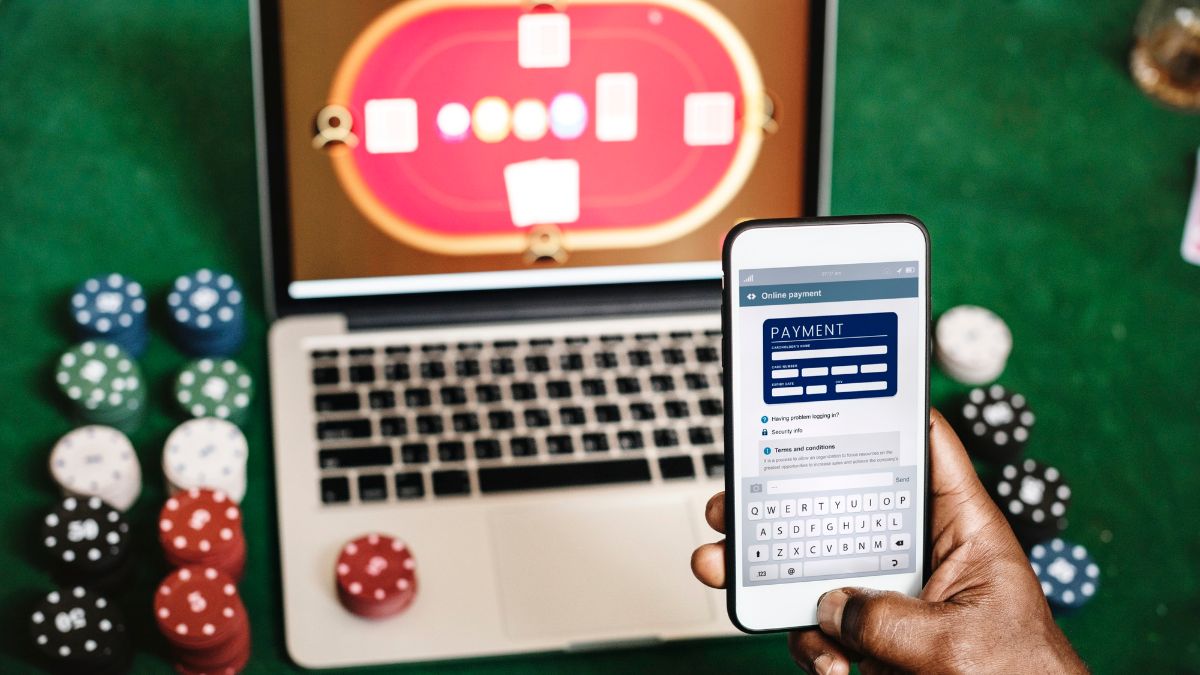
What has proven especially useful is separating my bankroll into individual session allocations and setting clear loss limits before I begin playing. The game’s pace is faster than traditional poker, and the absence of other players means decisions come swiftly. This speed can amplify both wins and losses, and without predetermined boundaries, it is tempting to chase losses beyond your comfort zone. I monitor my results by session rather than by hand, which evens out the short-term variance and gives me a better picture of my actual performance. Over time, this data shows whether my strategy is sound or whether leaks are diminishing my results, and that feedback loop is essential for continuous improvement.
The Basic Rules and Staking Framework
Ultimate Texas Hold’em is based on a clear premise that rapidly exposes layers of complexity once you start playing. You commence by placing two equal bets: the ante and the blind. The dealer then distributes two hole cards to you and two to themselves, along with a three-card community flop. Unlike traditional poker, you have four moments to act where you can either check or raise, and the magnitude of your raise varies with when you act. If you raise pre-flop, you can bet three or four times your ante. On the flop, you can raise two times your ante. On the turn or river, you can only raise one time your ante. This increasing structure means your early decisions bear significantly more weight, and I have found that comprehending this commitment is the first real hurdle for most players switching from standard Hold’em.
The banker requires a pair or better, which essentially defines the game’s risk profile. If the dealer fails to qualify, your ante bet pushes regardless of your hand strength, and the blind bet pays according to a fixed paytable. This qualification rule means you are not always trying to defeat the dealer’s hand directly; sometimes you are simply trying to preserve your ante while maximizing blind payouts. The blind bet pays on a sliding scale that commences at a straight and goes up to a royal flush, and it pays irrespective of whether you win the main hand. I have seen countless players overlook this nuance, regarding the blind as a sunk cost rather than an active component of their expected return. Recognising that the blind bet works separately from the ante and play bets is essential for understanding why certain borderline hands become profitable calls or raises.
The progressive raise structure determines the entire strategic framework. When you bet four times your ante pre-flop, you are investing significant capital based on partial information, which means you must have a really strong starting hand. The mathematics here are harsh: raising light pre-flop erodes your bankroll faster than nearly any other mistake. I have recorded sessions where careful pre-flop folding protected my stack through extended dry runs, while aggressive players around me bled chips on marginal holdings. The two-times raise on the flop is what I consider the game’s strategic sweet spot, offering a balanced risk-reward ratio where you have seen five of the seven cards that will eventually define the hand. By the turn and river, your raise option reduces to one times the ante, which basically changes the calculus. At this stage, you are often making a marginal value decision or a defensive call to avoid giving up your ante and blind bets entirely. The mathematical expectation of raising earlier with appropriate holdings always outperforms passive play, because the larger raise multipliers available on earlier streets allow you to get maximum value when you have an edge.
Understanding the Blind Bet Paytable and Its Impact
The blind wager is the aspect of Ultimate Texas Hold’em that the majority of newcomers fail to grasp, yet it adds significantly to the game’s overall return. This bet rewards according to a set schedule based on your ending hand ranking, and it compensates even if you lose the main hand to the dealer. I consistently recommend examining the exact structure before dedicating to a session. The blind wager cannot be increased or modified after the first bet, which turns it a inactive but powerful component of your general theoretical value.
A common paytable gives the following:
- Royal flush: 500 to 1
- Straight flush: 50 to 1
- Four of a kind: 10 to 1
- Full house: 3 to 1
- Flush: 3 to 2
- Straight: 1 to 1
What renders the blind bet tactically important is how it influences borderline decisions. When you hold a drawing hand that could hit a straight or flush, the blind payout contributes concealed value that standard ante-play calculations fail to account for. A flush draw that hits not only wins the main pot but also generates a 3 to 2 blind payout, which can transform a close call into a definitely advantageous one. I have adjusted my turn and river calling ranges especially to factor in blind paytable equity, especially with matching-suit hands that can make flushes or straight draws that can hit. Ignoring this aspect of the game is similar to playing with an partial understanding of the odds, and over time it will cost you money that sharp competitors take.
Flop Strategy and Interpreting Community Cards
Once the flop hits, your options expands considerably, and this is where I see the greatest divide between amateurs and professionals. You now have five community cards: your two starting cards and the three community cards. The betting option reduces to two times your ante, which means you need less hand strength to warrant adding more chips. The basic guideline I use is to raise any hand that has a pair or higher, any flush draw with a higher card to the board, and any open-ender with at least one overcard. This guideline encompasses most advantageous betting situations, though I constantly adapt based on board texture. A paired board, for example, reduces the value of drawing hands because the opponent is more likely to have trips.
What sets apart careful flop play from mindless following to charts is understanding how your hand relates with the dealer’s likely holding. Since the dealer’s hand is unpredictable, you are not ranging them in the conventional sense, but you are judging your hand’s value against an typical distribution. A middle pair on a unconnected board has different implications than the same pair on a structured, wet board where the dealer could quickly connect with straight or flush draws. I have found that players who simply commit to memory raise thresholds without considering board texture forfeit money on the table. The flop is your last chance for a multi-times raise, so leaning on the side of aggression with borderline but usable holdings often turns out correct when you analyze the long-run mathematics.
Turn and River Considerations
By the time the turn appears, your decisions shrink to a single raise or a fold, and this is where the game’s risk management gets most concrete. You have committed your ante and blind bets, and folding now means forfeiting both. The limit for continuing drops substantially compared to earlier streets. I generally raise on the turn with any pair, any draw that improved, and even ace-high hands if the board is scattered and I hold overcards. The reasoning is clear: the pot odds warrant continuing with fairly weak holdings because you only risk one additional unit to protect your existing investment. Folding too often on the turn is a hidden bankroll killer that shows up only over extended sessions.
The river marks the final decision point, and by now the hand’s outcome is largely decided impressarioo.de. You should bet with any hand that has reasonable showdown value against a random dealer hand. This includes any pair, ace-high on most boards, and occasionally king-high if the board is particularly dry and unpaired. The dealer’s qualification requirement of a pair or better means that on boards where no pair is possible, your high card can win the ante even if you lose the blind bet. I pay close attention to board texture on the river: a board with four connected cards or three suited cards increases the likelihood the dealer has connected, which should narrow your calling range slightly. sudoku.zeit.de These adjustments are subtle but compound meaningfully over thousands of hands.
The Online Platform and Site Functionality
Playing Ultimate Texas Hold’em on a digital platform presents aspects that are not present in a land-based casino, and I have invested time evaluating how these elements impact the overall experience. The design on Impressario Casino presents the game with clarity, revealing your hole cards prominently while holding the community cards, bet options, and paytable visible without overcrowding the screen. This layout is significant more than recreational players recognise, because instant confusion about bet sizing or hand strength can result in costly errors. The site handles decisions efficiently, with no noticeable delay between your click and the game’s reaction, which preserves the pace that makes the game captivating. I have tested the mobile version thoroughly and observed that the touch targets are scaled suitably for phone screens, lowering the risk of misclicks during critical decision points.
Apart from the game interface itself, the broader platform infrastructure influences how you play Ultimate Texas Hold’em. Deposit and withdrawal processing times affect how quickly you can add money and access winnings, and I have discovered that e-wallet transactions usually clear within twenty-four hours while card-based withdrawals may take several business days. The platform functions under a recognised gaming licence, which provides a framework for dispute resolution and guarantees that the random number generator managing card distribution receives regular auditing. These operational details might seem disconnected from the game itself, but they directly affect your capacity to maintain a consistent playing schedule and trust that results are truly random. I consistently check licensing information and payment processing timelines before dedicating significant time to any system, and I advise you act likewise.